🚀
Loading...
Fetching data from NASA APIs
Fetching data from NASA APIs
One of the most popular websites at NASA is the Astronomy Picture of the Day. In fact, this website is one of the most popular websites across all federal agencies. It has the popular appeal of a Just...
2026-04-03
Picture Date
Image
Media Type
v1
API Version
10K+
Since 1995
Loading HD Image...
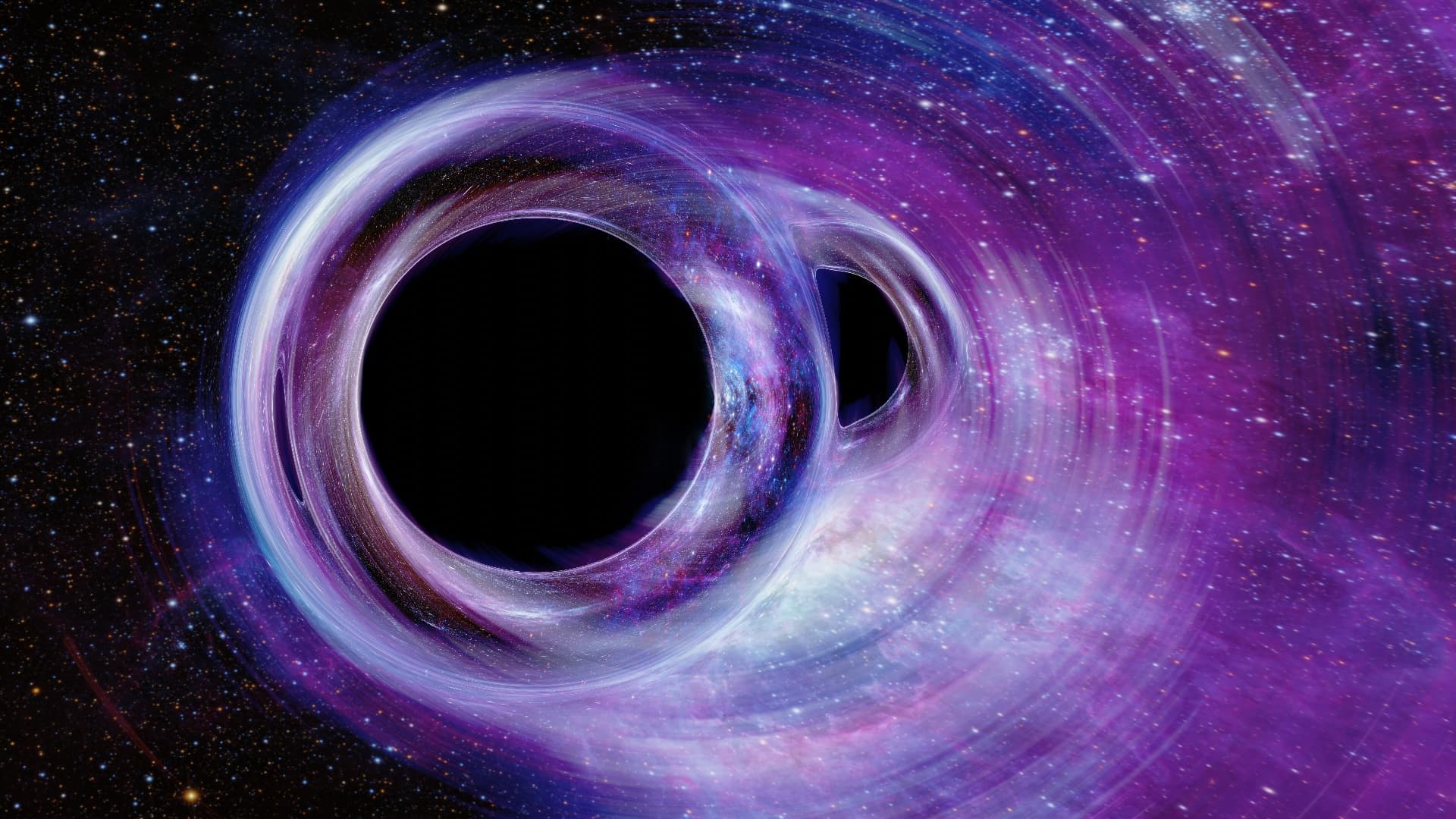
How can we see what is invisible? Black holes are not easy to see in the dark cosmic night, but astronomers can find them by analyzing their gravitational effects on matter, light and spacetime. The featured image shows an illustration that combines a simulation of a black hole binary system in its final "death-dance" with an astrophotography image of the Tarantula Nebula in the background. Even though black holes don't emit light, they distort the path of light rays, acting like a gravitational lens. As a result, the nebula appears extremely distorted, forming Einstein rings and multiple images. Tarantula Nebula lies in the Large Magellanic Cloud, a dwarf galaxy that is one of the satellite galaxies of the Milky Way, 160,000 light-years away. That is more than 1,000 times closer than any of the binary black hole mergers detected so far. We'll probably never detect a merger so close to home!
Copyright
Carl Knox
Formatted Date
Friday, April 3, 2026
1995
Year APOD was launched
10K+
Images published to date
1M+
Daily page views
21+
Languages available
NASA
Most popular website
MTU
Co-managed with Michigan Tech